How Much Does a Kitchen Renovation Cost in Sydney in 2026?
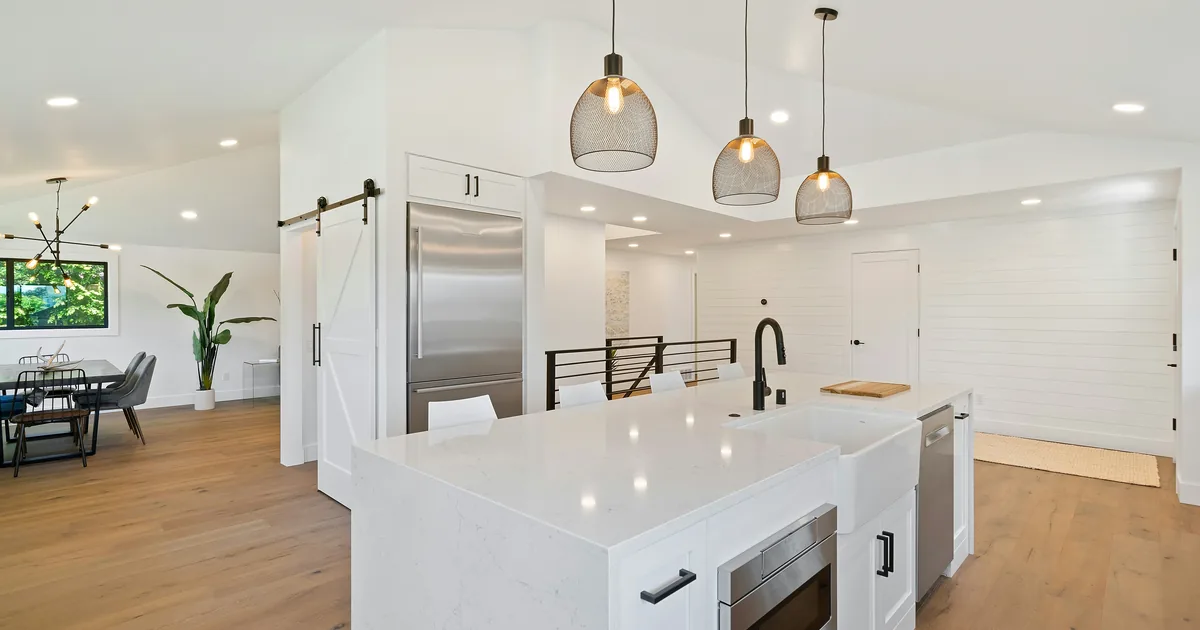
Sydney kitchen renovations are expensive. There's no polite way to say it. If you've started asking around or browsing for inspiration, you've probably had a moment where the numbers stopped making sense. This guide breaks down what you're actually paying for, why Sydney costs more than almost anywhere else in Australia, and how to walk into a builder conversation with a realistic number in your head.
Why Sydney costs what it costs
Sydney's construction labour market is one of the tightest in the country. Cabinetmakers, tilers, plumbers and electricians are all pulling double duty across residential renovations and commercial fit-outs, and there simply aren't enough of them to go around. When trades are busy, their rates go up and their timelines get longer. Both of those things add cost to your project.
On top of labour, inner-city and eastern suburbs jobs carry what tradespeople informally call a "Sydney tax": parking fees, difficult access, tight stairwells and time-consuming logistics that get quietly baked into quotes. A job that takes a tradie two hours in a Parramatta house might take three in a Surry Hills apartment. You pay for that time either way.
The result is a regional cost multiplier of approximately 1.28 times the national median for kitchen work. A kitchen that might cost $28,000 in Adelaide is likely to come in around $36,000 in Sydney for the same finishes, same scope and same quality of trade. That gap is real and consistent across the industry.
What you get at each price point
These figures are based on a standard kitchen of around five linear metres, which is common in both Sydney houses and apartments. All prices include GST and cover supply and installation of cabinetry, benchtop, splashback and standard appliance connections. They do not include structural changes, plumbing relocation or appliances themselves unless noted.
| Tier | Typical range | What's included |
|---|---|---|
| Budget | $20,000–$35,000 | Flat-pack cabinetry, laminate benchtop, ceramic splashback, freestanding appliance connections. Good for investment properties or homeowners prioritising function over finish. |
| Mid-range | $35,000–$55,000 | Semi-custom joinery, stone benchtop, tiled splashback, mid-spec appliance connections. The most common choice among owner-occupiers renovating to live in. |
| Premium | $55,000–$80,000 | Custom cabinetry, integrated appliances, stone or glass splashback, soft-close hardware throughout. A meaningful step up in daily experience and durability. |
| Luxury | $80,000–$120,000+ | Full bespoke fit-out, European appliances, feature lighting, premium stone surfaces, custom handles and accessories. No compromises on anything. |
These are planning benchmarks. Your actual quote will depend on your layout, your chosen finishes, your contractor's current workload and the specific conditions of your home. Use them to sense-check a budget before you start calling builders, not as a substitute for written quotes.
Want a figure based on your actual kitchen size and suburb? The calculator adjusts for Sydney's cost multiplier automatically.
Run the numbersWhat actually pushes the cost up
The tier ranges above assume a reasonably straightforward job. Here's where costs can climb beyond those numbers:
Changing the layout
Moving the sink, rangehood or cooktop is one of the most common ways a kitchen renovation blows its budget. Each move requires a licensed plumber for drainage and a licensed electrician for power, and in older Sydney homes, you may be dealing with pipes or wiring that hasn't been touched in decades. Allow an additional $3,000 to $8,000 for a single point of relocation, more if multiple connections need to move.
Plumbing in a slab-on-ground home
Many Western Sydney homes and newer developments are built on a concrete slab rather than a suspended timber floor. Relocating drainage in a slab home means cutting into concrete, which is a significantly more involved job than rerouting pipes through a suspended floor. Add $3,000 to $6,000 to any quote for slab penetration work, and make sure it's explicitly scoped.
Removing a wall
Opening up a kitchen to a living area is one of the most popular Sydney renovation projects right now. It can transform how a home feels. It also adds real cost. A structural engineer needs to assess whether the wall is load-bearing, provide specifications, and sign off on the work. Budget $8,000 to $20,000 for wall removal including engineering, reinforcement, reinstatement of adjacent surfaces and repainting. Heritage overlay properties in inner Sydney may require additional council sign-off.
Stone benchtop
Engineered stone has become the standard expectation in mid-range and above Sydney kitchens. A quality stone bench on a five linear metre run costs $4,000 to $9,000 supply and install depending on thickness, edge profile and brand. Note that the engineered stone ban on certain silica-based products took effect in 2024, so your stone supplier should be supplying compliant materials. If you're using a budget supplier and the price seems unusually low, ask the question.
Access in apartments and terraces
If you're renovating a kitchen in a Sydney apartment above the ground floor, or in a terrace with narrow hallways and stairs, expect to pay more. Trades charge for difficulty. Materials take longer to move. Bulky items like cabinetry require more people to carry. For apartments in strata buildings, you'll also need to check with your owners corporation about approved working hours and any required inductions or bond payments before work starts.
What the industry data says
The Housing Industry Association's 2025 Kitchens and Bathrooms Report puts the national median kitchen renovation at $30,000 to $35,000. Applied to Sydney's cost environment, that translates to approximately $38,000 to $45,000 for a mid-range Sydney renovation, which is consistent with what builders are currently quoting for a five linear metre kitchen with stone benchtop, semi-custom joinery and tiled splashback.
hipages 2025 pricing data shows a wider range of $25,000 to $45,000 for Sydney mid-range kitchens, with the spread reflecting differences in joinery quality, benchtop material thickness and whether appliances are included in the renovation scope.
If you're getting quotes that come in significantly below these ranges, ask for a detailed breakdown. It's not impossible to do a good job for less, but it's worth understanding exactly what you're comparing.
Not in Sydney? The calculator covers Melbourne, Brisbane, Perth and Adelaide with city-specific multipliers.
Change cityHow long will it take
A standard Sydney kitchen renovation typically takes three to six weeks from demolition to completion, assuming no structural changes. The renovation itself is usually the shorter part of the process. What tends to stretch timelines:
Cabinetry lead times. Custom and semi-custom joinery is typically four to eight weeks from order to delivery. If you're working with a popular joinery supplier, that can stretch to ten weeks. The renovation cannot start in earnest until your cabinetry is on site or imminent.
Trade availability. Sydney trades are busy. Getting a tiler, plumber and cabinetmaker all available in the same two-week window can take four to eight weeks of forward planning. If your builder is managing all trades, this is their problem to solve. If you're project managing yourself, it's yours.
Council approvals. Most kitchen renovations don't require council approval if they're internal works with no structural changes. If you are removing a load-bearing wall or the property is under a heritage overlay, you may need a Development Application (DA) or a Complying Development Certificate (CDC) through a private certifier. Your builder can advise based on your council area and property specifics.
Budget versus mid-range: is the upgrade worth it
For most Sydney owner-occupiers, the jump from budget flat-pack to a semi-custom mid-range kitchen is the renovation decision with the clearest return. The additional cost of $12,000 to $18,000 buys you meaningfully better cabinetry construction, a stone benchtop that will outlast laminate by years, and a result that reads as genuinely premium rather than "nicely done on a budget."
The jump from mid-range to premium is a different calculation. At that point you're largely paying for customisation, integration and the satisfaction of having exactly what you want. For an investment property, it rarely makes financial sense. For a home you plan to live in for ten or more years, it often does.
If you're renovating to sell, real estate agents in Sydney consistently point to benchtop quality and appliances as the two things that most influence buyer perception during inspections. You can save money on joinery hardware and not have it show. A laminate benchtop, on the other hand, will show in every inspection photo and every walkthrough.
Get a planning estimate for your kitchen
Enter your kitchen size, finish tier and city to get a free estimate adjusted for current market costs.
Calculate My EstimateFrequently asked questions
Most kitchen renovations that are internal works with no structural changes do not require council approval in NSW. If you're removing a load-bearing wall, altering the building's footprint, or the property is in a heritage conservation area, you'll likely need either a Development Application through your local council or a Complying Development Certificate through an accredited certifier. Your builder or a building surveyor can advise on your specific property and council area before you start. When in doubt, check with your local council's duty planner.
In NSW, any residential building work valued at over $5,000 (including labour and materials) must be carried out by a contractor who holds a current licence from NSW Fair Trading. For a kitchen renovation, this typically means a licensed builder for the overall scope, plus licensed tradespeople for any plumbing and electrical work. You can verify a contractor's licence number through the NSW Fair Trading licence check at fairtrading.nsw.gov.au. Always ask for the licence number before signing a contract, and check it yourself.
Yes. All figures in this guide and in our calculator include GST. When comparing builder quotes, confirm whether the figure is GST inclusive or exclusive before comparing. Some initial estimates are presented excluding GST, which can make them look more competitive than they are. A reputable builder's written quote will state clearly whether GST is included.
The three most common sources of budget blowouts on kitchen renovations are: scope changes after work has started (changing finishes, adding items or moving things mid-project), hidden conditions found during demolition (old plumbing, asbestos in wet area sheets, structural surprises), and underestimating trade coordination costs in a self-managed renovation. The best protection against all three is a fixed-price contract with a clearly scoped bill of quantities, a contingency of ten to fifteen percent built into your budget, and a builder who has done similar work in similar homes in your area. Get at least three written quotes before committing.
Standard kitchen renovation quotes in Sydney typically exclude: the appliances themselves (fridge, oven, dishwasher, rangehood), flooring outside the kitchen footprint, painting of adjacent rooms affected by the work, any structural engineering fees if wall removal is involved, and costs arising from unexpected conditions found during demolition such as old wiring that needs upgrading. Ask your builder to walk you through exactly what is and isn't included in their quote before you sign anything.