Spa Bathroom vs Standard Renovation: Is the Wellness Upgrade Worth It in 2026?
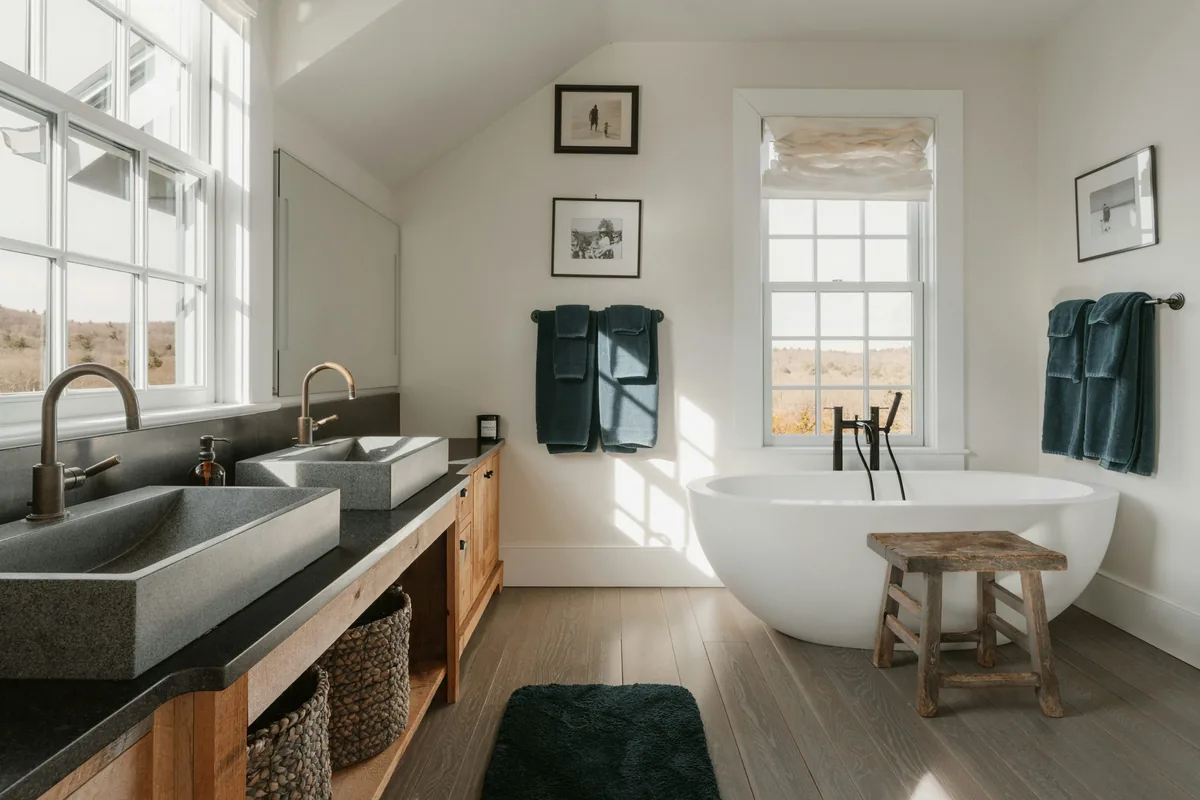
Every bathroom showroom in Australia is selling the same dream right now: the spa retreat. The freestanding bath. The rainfall shower. The heated stone floor. The steam room option that felt outrageous three years ago and now comes up in every second renovation conversation. The question nobody in the showroom will answer honestly is whether spending $55,000 on a wellness bathroom makes more financial sense than spending $28,000 on a very good standard one. This guide does the maths.
What "wellness bathroom" actually means in cost terms
The term is used loosely, but in practice a wellness or spa-style bathroom renovation in Australia typically includes some combination of the following elements, each of which adds meaningful cost on top of a standard renovation:
Freestanding bath
Supply only runs $1,500 to $6,000 for a quality freestanding bath, plus floor-mounted tapware at $800 to $2,500, plus installation. Total addition over a built-in bath: $4,000 to $10,000 depending on the bath and tapware chosen.
Rainfall or multi-function shower
A quality overhead rainfall shower with separate hand shower and body jets requires a larger water supply, higher ceiling height (or a custom recess) and a shower screen designed around the footprint. Budget an additional $3,000 to $7,000 over a standard shower fitout.
Heated floors
Electric underfloor heating in a standard bathroom adds $1,200 to $2,500 installed. This is one of the better value wellness upgrades because the cost is relatively contained and the daily benefit, particularly in Melbourne and southern cities, is significant. It’s also one of the elements buyers notice and remember during inspections.
Steam shower or sauna
A prefabricated steam unit installed in an existing shower space adds $4,000 to $12,000. A custom-built steam room with tiled walls, a bench and a proper steam generator runs $15,000 to $35,000 depending on size. This is where the wellness bathroom starts to move into genuinely expensive territory.
Feature stone or large-format tiles
Imported stone tiles, book-matched marble or large format porcelain slabs (1200x2400mm) cost significantly more per square metre than standard tiles and require more skilled installation. In a six square metre bathroom, moving from mid-range tiles to a premium stone feature wall adds $4,000 to $9,000 in material and labour combined.
Custom joinery
A bespoke floating vanity in a premium finish, rather than an off-the-shelf option, adds $3,000 to $8,000 depending on size and material. If the joinery extends to integrated storage towers or a full bathroom wall unit, costs increase accordingly.
Use the bathroom calculator to compare a standard vs premium specification for your bathroom size and city.
Compare specsSide by side: standard vs spa, what you actually get
- Built-in bath or shower-over-bath
- Frameless shower screen
- Wall-hung vanity, stone top
- Full retile in quality ceramic or porcelain
- Heated towel rail
- Quality tapware throughout
- Tiled niche
- Freestanding bath with floor tapware
- Separate walk-in shower, rainfall head
- Feature stone or large-format tiles
- Heated stone or porcelain floors
- Custom vanity joinery
- Premium European tapware
- Steam function or infrared sauna option
The ROI question: what does the upgrade actually return
This is where the honest answer diverges from the showroom conversation. The return on a wellness bathroom renovation depends heavily on three things: the value of your home, the expectations of buyers in your suburb, and whether you’re planning to sell soon or live in the home for years.
When the premium upgrade makes financial sense
If your home is worth $1.5 million or more and is in a suburb where buyers routinely expect high-spec bathrooms, a wellness renovation is a reasonable investment. In suburbs like Mosman, Toorak, Paddington or Applecross, a standard mid-range bathroom in an otherwise premium property can actually work against you in an inspection. Buyers expect the bathroom to match the rest of the house, and a mismatched renovation reads as "unfinished."
In this context, spending $60,000 on a spa bathroom that lifts perceived value by $80,000 to $100,000 is a reasonable bet. It’s not guaranteed, but it’s justifiable.
When the standard renovation makes more sense
If your home is worth under $900,000, or is in a suburb where buyers are focused primarily on location, layout and condition rather than premium finishes, a $60,000 spa bathroom is likely to cost you more than it returns. Buyers in these markets will appreciate a clean, modern, well-executed standard bathroom. They will not necessarily pay a premium for a freestanding bath they didn’t ask for.
The classic overcapitalisation risk is spending $30,000 more than the market will recognise. A $28,000 standard renovation and a $58,000 wellness renovation in the same suburb, in homes of similar value, may achieve very similar sale prices. In that scenario, the $30,000 difference is largely a lifestyle spend, not an investment.
The calculation most people get wrong
The mistake is treating renovation cost as directly convertible to sale price. It isn’t. A bathroom that costs $60,000 to build does not add $60,000 to your home’s value. The return depends on what comparable homes in your area have, what buyers expect and whether the renovation is well-executed or not. An average $60,000 renovation adds less than a brilliant $30,000 one.
Before deciding between standard and wellness, ask your local real estate agent what bathroom specification buyers in your street expect. That single conversation is worth more than any general guide, including this one. They know what buyers in your specific suburb will pay more for, and what they take for granted.
The case for the wellness upgrade if you’re staying put
If you’re renovating a home you intend to live in for five or more years, the financial ROI calculation matters much less. The daily experience of a well-designed bathroom, particularly one with heated floors in a Melbourne winter or a rainfall shower after a long week, has genuine lifestyle value that doesn’t show up in a property valuation. Many homeowners who have made the upgrade report that it’s one of the renovations they use and enjoy most. That’s a legitimate reason to spend the money.
The key is being clear with yourself about which decision you’re making. If it’s a lifestyle decision, own it as a lifestyle decision and budget accordingly. The problems arise when homeowners convince themselves that a wellness upgrade is a safe financial investment and then discover that the market didn’t agree.
See the Melbourne bathroom cost guide for detailed tier breakdowns, or read about Sydney kitchen costs.
All guidesCompare standard vs premium bathroom costs
Use the bathroom calculator to see the price difference between a mid-range and premium specification for your bathroom size and city.
Compare Bathroom SpecsFrequently asked questions
In the right home and suburb, yes. In a premium property where buyers expect high-spec bathrooms, a quality freestanding bath is a positive signal. In a median-priced home in a suburb where buyers are focused on bedrooms, location and overall condition, a freestanding bath is unlikely to move the sale price meaningfully. The bath itself might cost $3,000 to $6,000 supply only, but the total addition including tapware, floor penetration and associated trade work is typically $6,000 to $12,000. Whether that’s recovered at sale depends entirely on your market.
As a lifestyle upgrade for someone who will use it regularly, a steam shower can be genuinely worthwhile. As a financial investment, it’s harder to justify. The installation cost is high, maintenance requirements are greater than a standard shower, and buyer interest varies significantly. In our experience, heated floors and a quality rainfall shower are better value wellness upgrades than a full steam function. They cost less, appeal to a broader range of buyers, and provide daily value without the maintenance overhead.
General industry guidance suggests a well-executed bathroom renovation returns 60 to 80 percent of its cost in added property value, on average. That means a $30,000 renovation might add $18,000 to $24,000 in perceived value, while a $60,000 renovation might add $36,000 to $48,000. These are rough averages. The actual return depends heavily on your suburb, your property’s current value, the quality of execution and market conditions at the time of sale. A local real estate agent who knows your street will give you a far more accurate view than any national benchmark.
Yes, significantly. A spa-style fit-out in a four square metre bathroom looks forced and makes the room feel more cluttered, not more luxurious. A freestanding bath requires enough floor space to look right and be used comfortably. Large-format tiles need adequate wall area to read as a feature rather than an awkward choice. As a rough guide, wellness bathroom features start to make visual and practical sense in bathrooms of eight square metres or more. In smaller bathrooms, a very well-executed standard renovation often looks better and costs less.