Bathroom Renovation Costs Across Australia in 2026: City-by-City Breakdown
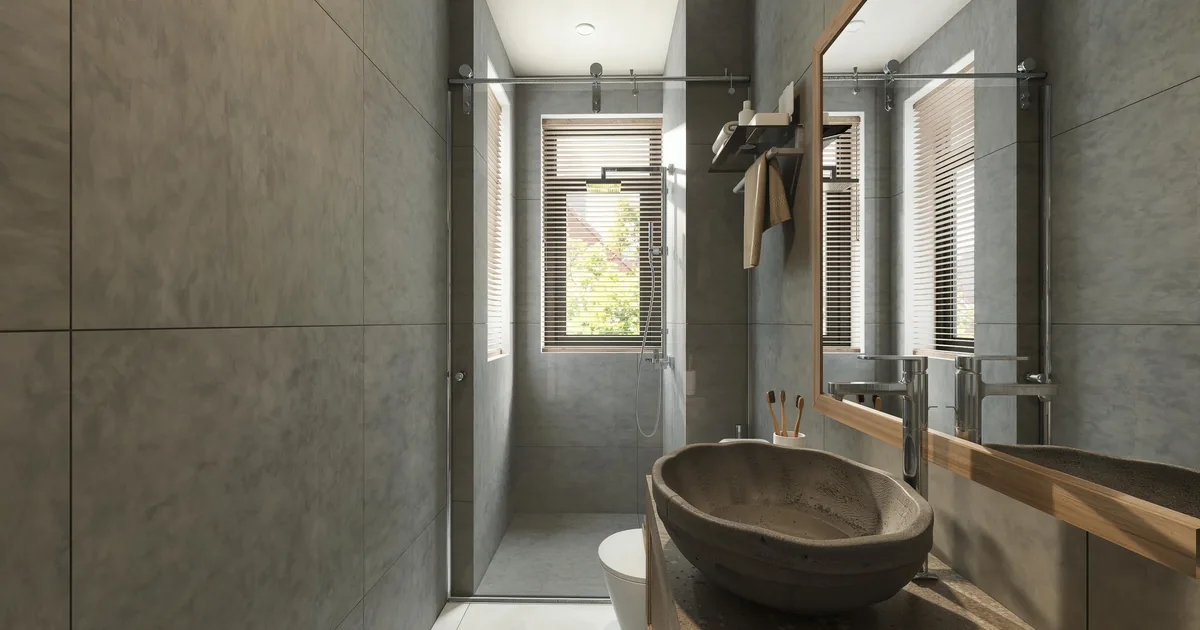
Renovation costs in Australia are not uniform, and the gaps between cities have widened considerably since 2022. A mid-range bathroom that costs $28,000 in Adelaide will cost you $37,000 in Brisbane for the same finishes, same fixtures and same quality of trade. If you’re budgeting based on what a friend or family member spent in a different city, you may be significantly off the mark. This guide breaks down what a standard bathroom renovation actually costs in each Australian capital city right now, and explains the structural reasons behind the differences.
The short version: mid-range bathroom by city
These figures represent a standard six square metre bathroom, fully renovated with a frameless shower screen, wall-hung vanity, full retile, quality tapware and heated towel rail. Same spec, five cities.
All figures include GST and are planning benchmarks, not quotes. Your actual cost will depend on your bathroom’s existing condition, your chosen finishes, whether any layout changes are needed and your builder’s current pricing. Use these numbers to sense-check a budget, not to replace written quotes from licensed contractors.
Why Brisbane is now the most expensive city
This surprises many people. Sydney has a reputation as Australia’s most expensive city for everything, and for most things that’s still true. But for construction and renovation work specifically, Brisbane has overtaken it in 2025 and 2026.
The driving factor is the sustained construction boom flowing from Olympics infrastructure, South East Queensland population growth and a significant social housing programme that has been running concurrently with private residential demand. Licensed trades, including tilers, plumbers, waterproofers and electricians, are stretched across an unusually large volume of work. When demand significantly exceeds supply of skilled labour, rates rise and timelines extend. That’s the Brisbane market right now.
The practical consequence for homeowners is that getting good trades in Brisbane requires more forward planning than in any other city. Booking lead times of ten to fourteen weeks are not unusual for a quality tiler. If you’re planning a bathroom renovation in Brisbane in 2026, starting the builder conversation six months before your ideal start date is not excessive.
For a detailed deep-dive into Melbourne bathroom costs including Victorian compliance requirements, see the Melbourne bathroom guide.
Melbourne guideFull comparison: all tiers, all cities
Here’s how the numbers map across budget, mid-range and premium tiers for each city. All figures assume a standard six square metre bathroom with no layout changes.
| City | Budget | Mid-range | Premium |
|---|---|---|---|
| Sydney | $18k–$27k | $29k–$44k | $46k–$72k |
| Brisbane | $19k–$28k | $30k–$46k | $47k–$75k |
| Melbourne | $17k–$25k | $27k–$40k | $42k–$66k |
| Perth | $17k–$25k | $27k–$40k | $42k–$66k |
| Adelaide | $15k–$23k | $24k–$37k | $39k–$61k |
What the multiplier actually measures
The regional cost multiplier is not arbitrary. It reflects a combination of real, measurable factors that vary by city: average trade hourly rates, material freight and distribution costs, access and logistics complexity, and local regulatory overhead. Some of these factors move slowly, others can shift significantly in response to construction demand.
Labour is the dominant driver. A licensed tiler in Brisbane is billing at a meaningfully higher day rate in 2026 than the same trade in Adelaide, because the Brisbane market is busier and the competition for their time is more intense. Materials cost roughly the same across all cities. The main variable is the freight component for Western Australia, which adds a modest premium for imported materials arriving by ship rather than road.
Access costs affect inner-city renovations more than suburban ones. A bathroom renovation in a Potts Point apartment involves parking permits, time-limited building access, goods lift restrictions and owners corporation requirements that simply don’t exist in a Penrith house. That friction costs money and it’s reflected in inner-Sydney and inner-Melbourne quotes compared with suburban equivalents.
City-specific things worth knowing
Sydney: the access premium
Inner Sydney’s density creates real logistical costs. Narrow terraces in Newtown or Balmain, apartments in Surry Hills or Darlinghurst, and heritage properties across the eastern suburbs all carry access premiums that don’t show up in a generic national benchmark. The Sydney kitchen renovation guide covers this in more detail, but the same principles apply to bathrooms: the harder your home is to access and work in, the more you’ll pay relative to the benchmark.
Brisbane: book early
The trade availability problem in Brisbane is real and it cuts both ways. Not only are timelines longer, but it’s harder to get three quality quotes back in a reasonable window. Some homeowners find that builders who would normally quote competitively are too busy to respond at all. Start your research and quote process earlier than you think you need to.
Melbourne: plan for the waterproofing step
Victorian requirements around wet area waterproofing add a step to the renovation programme that doesn’t exist in every other state in the same form. Pre-tile inspection requirements should be confirmed with the Victorian Building Authority or a registered building surveyor before work starts. As covered in detail in the Melbourne bathroom guide, this is not onerous but it does affect scheduling.
Perth: the isolation factor
Perth’s cost premium above Adelaide is partly explained by competition from the resources sector for licensed trades, and partly by the genuine freight cost of importing premium materials from the eastern states or overseas. For a budget or mid-range renovation using locally available materials, Perth is broadly comparable to Melbourne. For a premium renovation specifying imported stone, European tapware or custom joinery made interstate, the freight component adds meaningfully to the final cost.
Adelaide: the real opportunity
Adelaide’s 1.08 multiplier makes it genuinely the best value market for renovation work among Australia’s capital cities. A mid-range bathroom that would cost $38,000 in Sydney costs around $28,000 in Adelaide for comparable quality. For investors managing renovation budgets across multiple properties, this is a real and significant difference. For owner-occupiers, it means your budget goes further in Adelaide than anywhere else.
Wondering whether a wellness upgrade makes sense in your city? The spa bathroom ROI guide breaks down when the upgrade is worth it.
Read the ROI guideGet a city-adjusted bathroom estimate
Enter your bathroom size, finish tier and city. The calculator applies the correct regional multiplier and gives you a planning range in seconds.
Calculate My EstimateFrequently asked questions
Brisbane’s construction market is unusually pressured in 2025 and 2026. The combination of Olympics infrastructure projects, strong population growth across South East Queensland and a significant social housing programme has created very high demand for licensed trades at the same time. When the demand for tradespeople significantly exceeds supply, rates rise. Brisbane’s cost multiplier has overtaken Sydney’s as a result. This may moderate after the Olympics construction peak, but trade availability is expected to remain tight for the foreseeable future.
Adelaide’s renovation market is less pressured than other capital cities. Labour rates are lower, there is no dominant competing industry bidding for trades the way the resources sector does in Perth or infrastructure projects do in Brisbane. Adelaide also has a lower cost of living overall, which flows through to trade wages and therefore to renovation quotes. The quality of work available in Adelaide is not lower than other cities. You get the same calibre of licensed tradespeople for a meaningfully lower rate.
The benchmarks apply broadly but apartments carry additional costs that aren’t captured in a per-city multiplier. Strata building requirements, including owners corporation approvals, builder inductions, restricted working hours and goods lift access, all add time and cost to any apartment renovation. Inner-city apartments in particular tend to come in at the higher end of the city range. If you’re renovating an apartment, treat the upper end of the relevant city range as your working baseline and confirm with your builder what site-specific costs will apply.
Perth’s isolation adds to material costs, particularly for imported products, but its labour market dynamics produce a similar overall result to Melbourne. The resources sector competes for licensed trades in Perth in a way that keeps rates elevated, offsetting the advantage that Adelaide has from a less pressured labour market. For a standard renovation using locally available materials, Perth and Melbourne come in at roughly the same level. For premium renovations specifying imported materials, Perth can run slightly higher than Melbourne due to freight.